Welcome to WordPress. This is your first post. Edit or delete it, then start writing!
Author: CFHJ
-
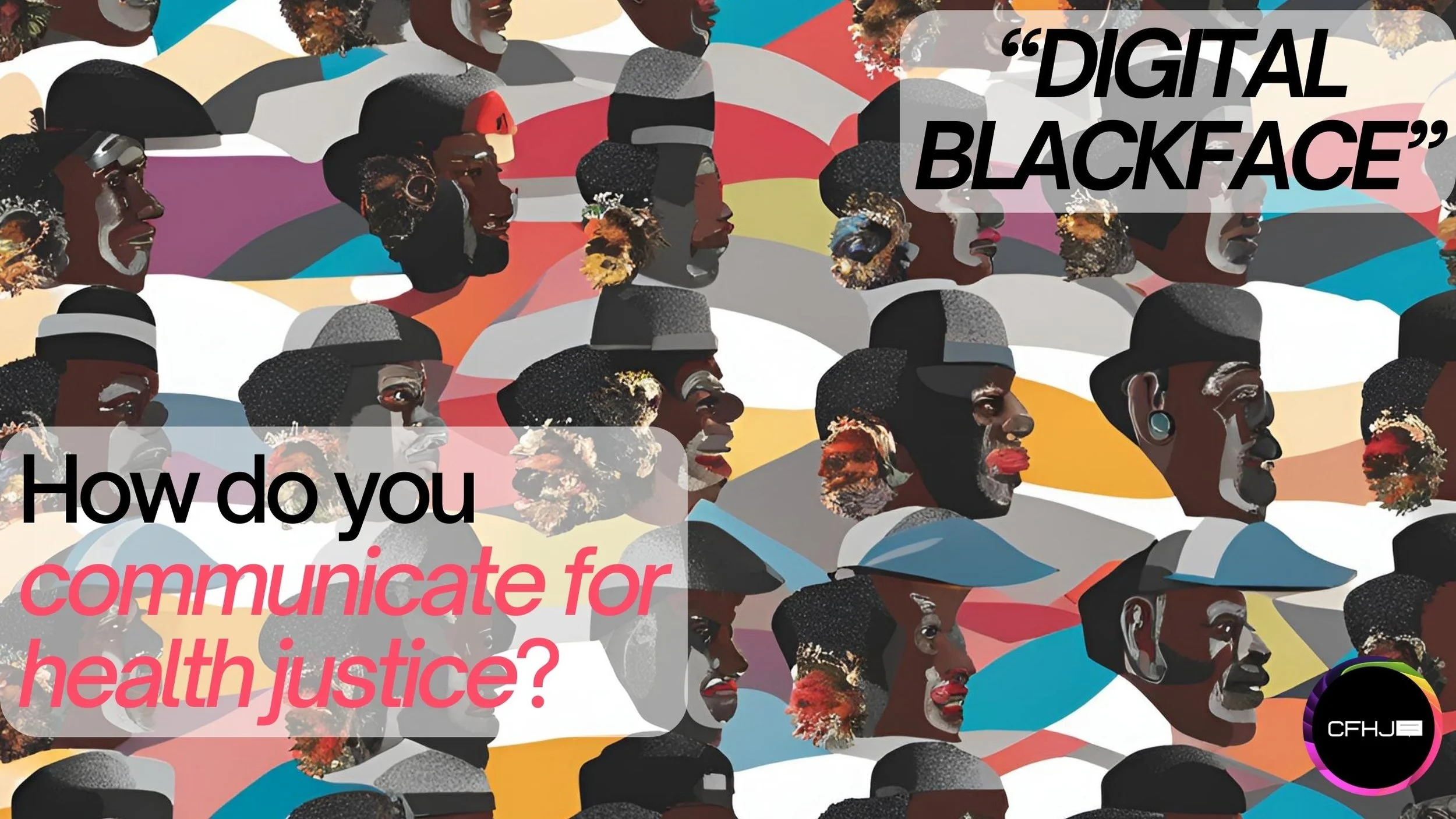
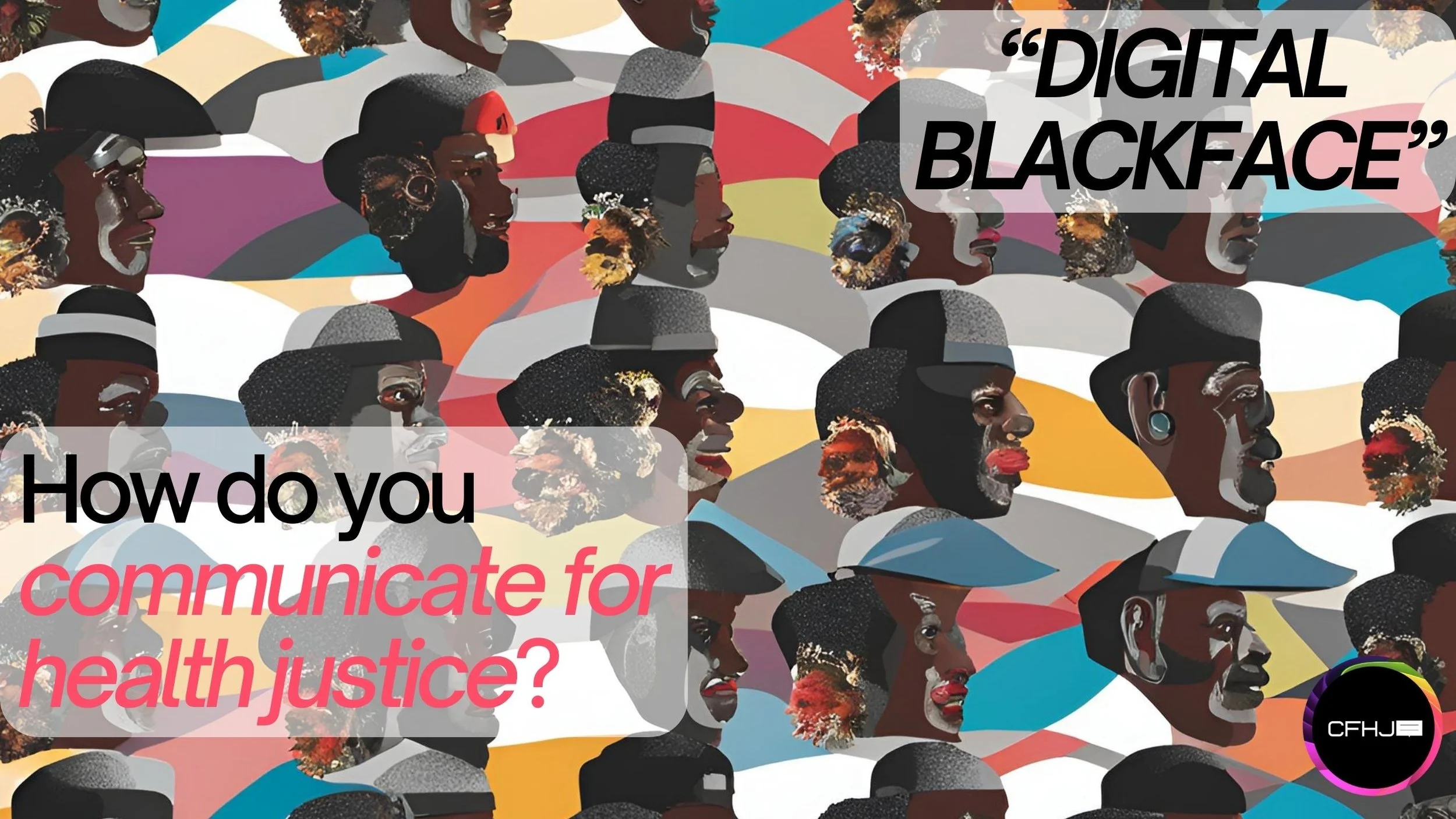
Digital Blackface: A Synopsis
Digital blackface is when non-Black people use the images and voices (online) of Black individuals to explain emotions or phenomena.” Jardin Dogan, M.Ed., Ed.S., of Black Folx Therapy (@blkfolxtherapy).
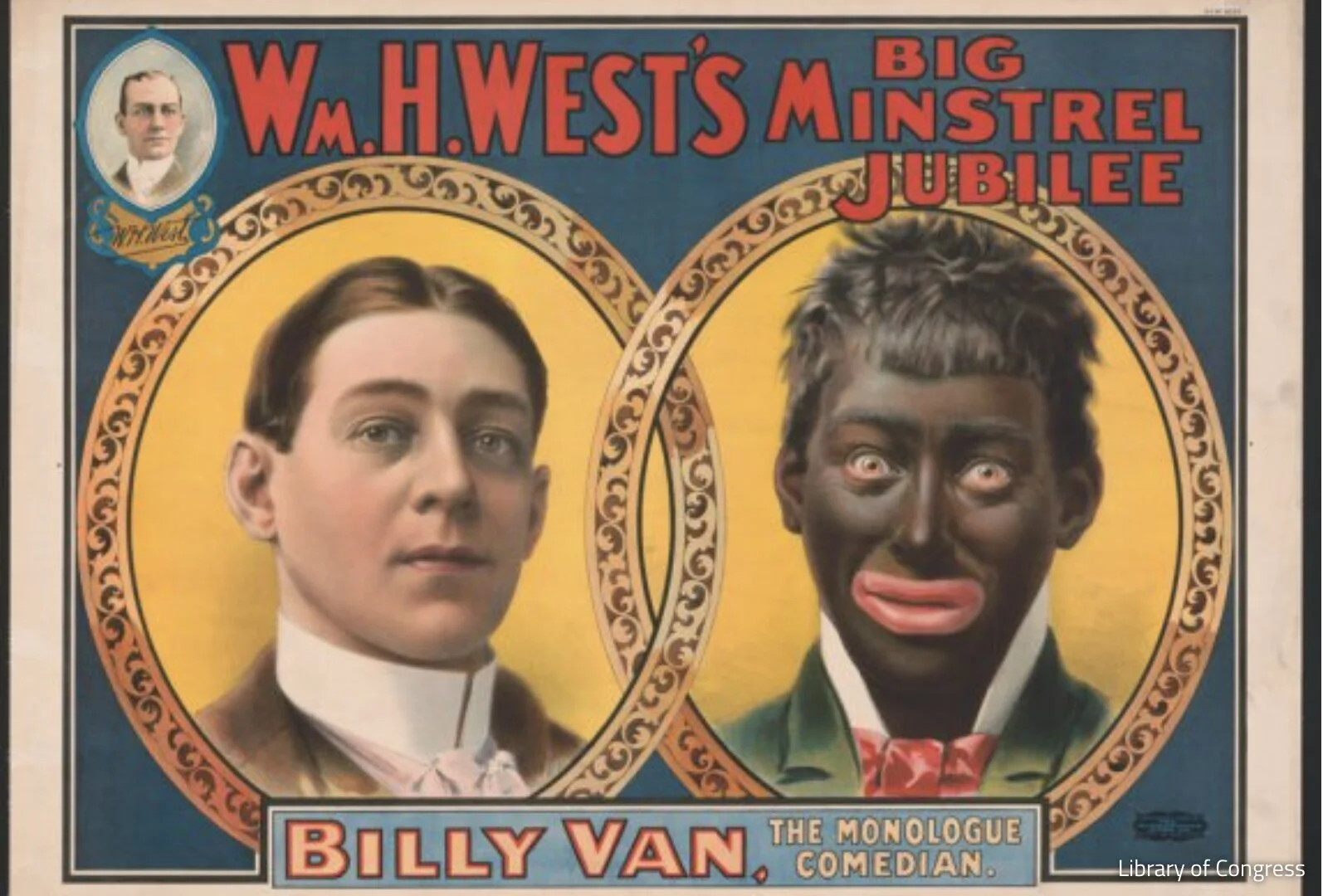
The roots of #digitalblackface date back to the 19th century and it continues to be harmful today. It has been historically linked to “minstrel shows.” These were a form of racist entertainment dating back to the 19th century, where white actors “dressed up” their skin and clothes to mimic Black people.
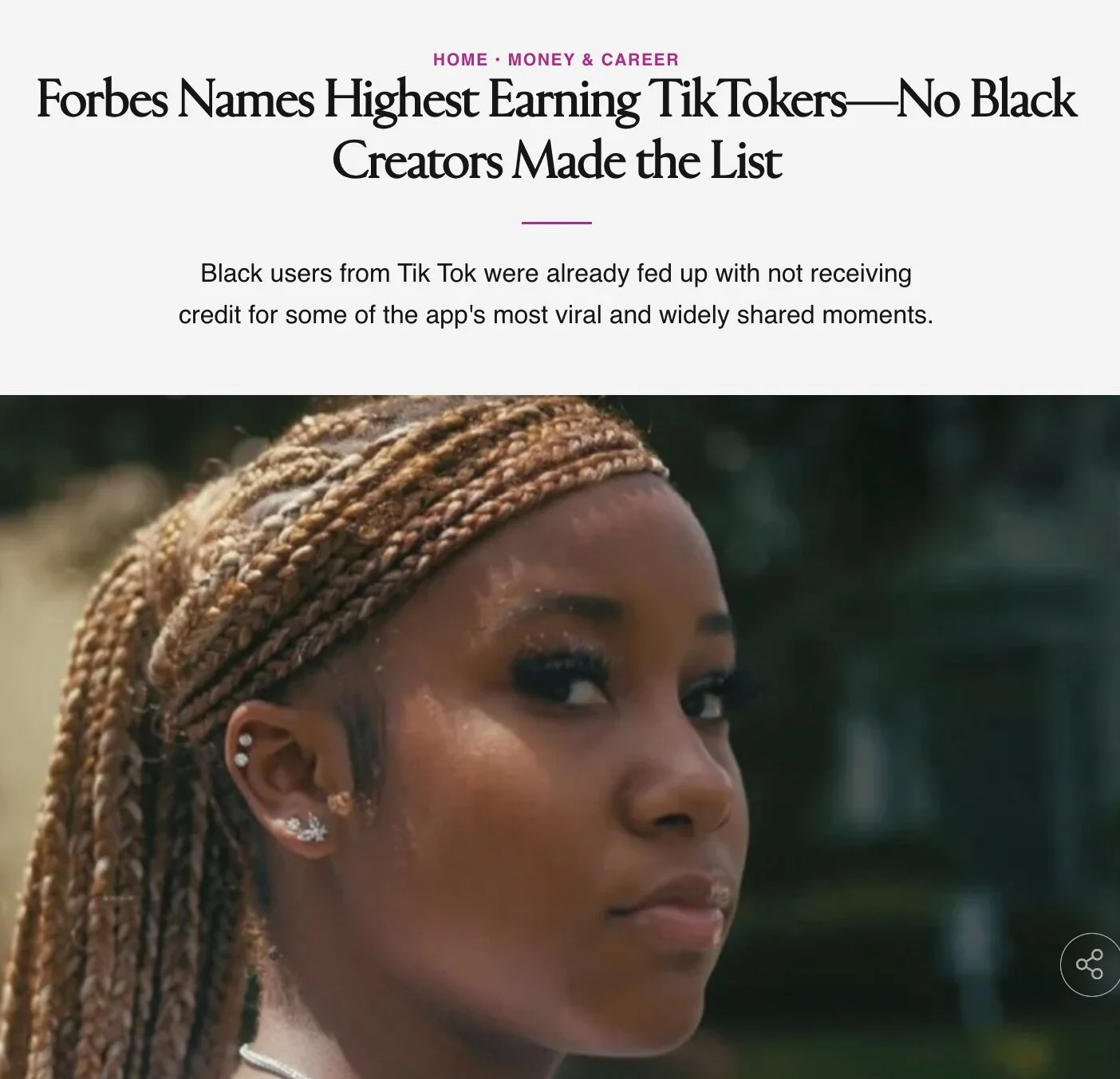
So, where does #digitalblackface show up in health-related spaces? Here you’ll see just a few problematic examples…
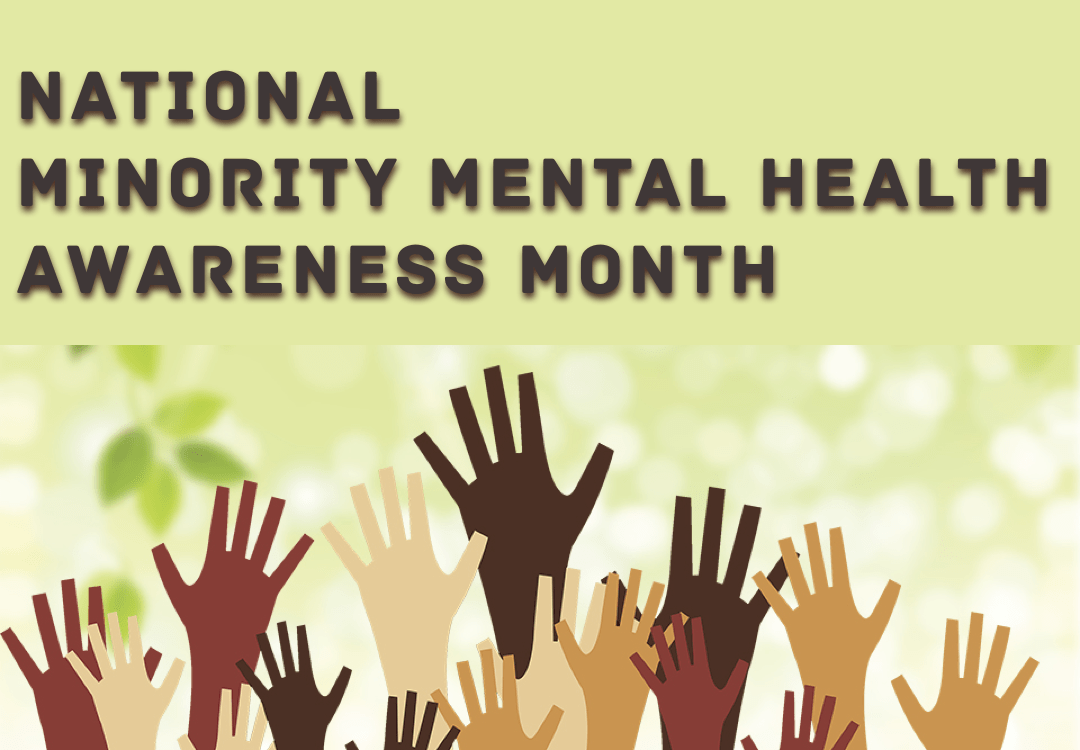
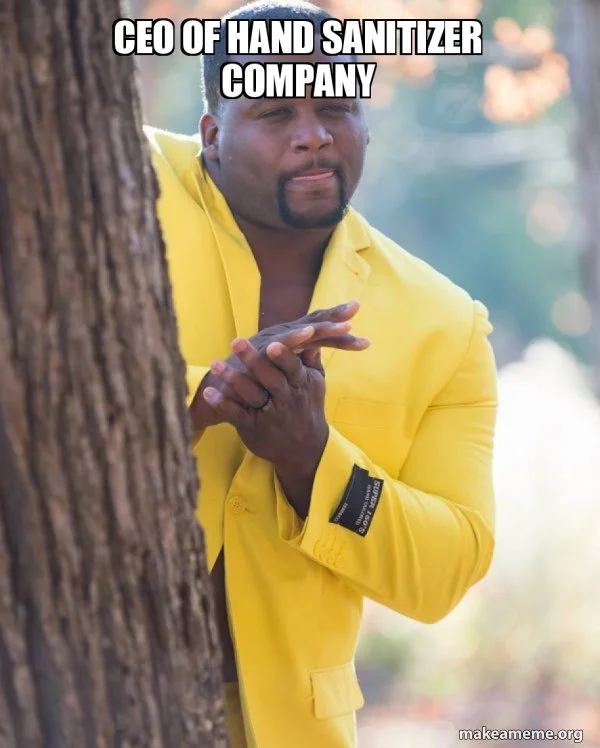
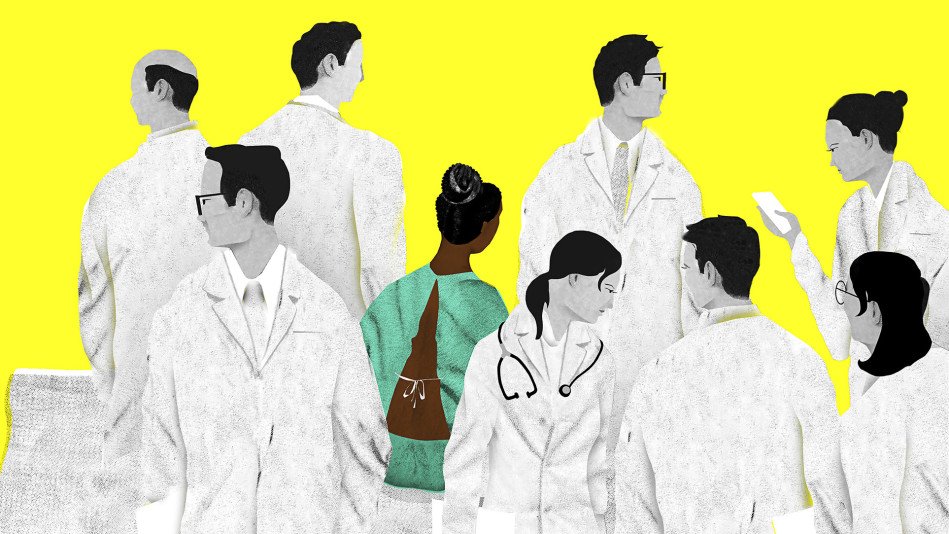
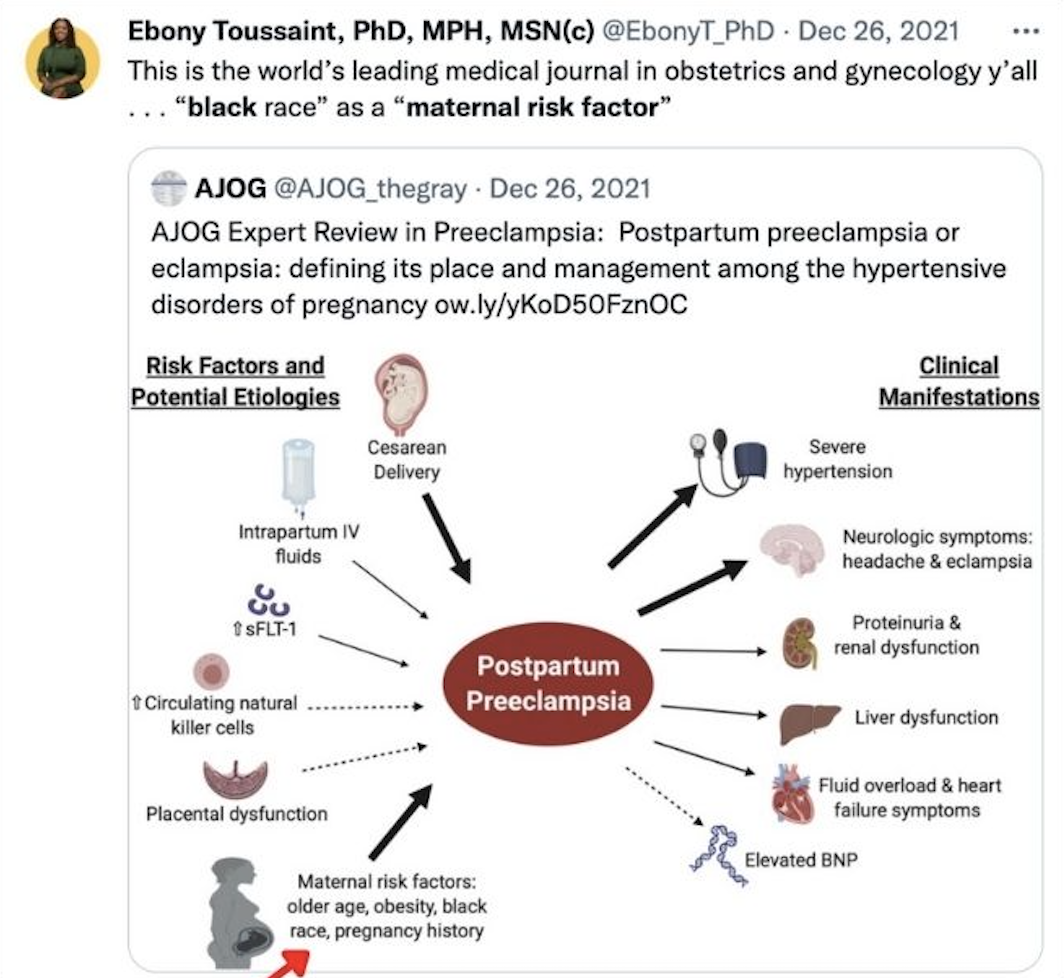
These examples show we still have a long way to go for true #healthcommunication. Mislabeling race as a risk factor instead of directly addressing racism in health outcomes, or using tokenized Black faces to feign diversity in health and healthcare, highlight digital blackface.
If we’re serious about health equity, we need to tackle these practices.
Should we create a toolkit, infographic, or host another workshop on digital blackface in health communication?
Let us know at info@cfhj.org.
-
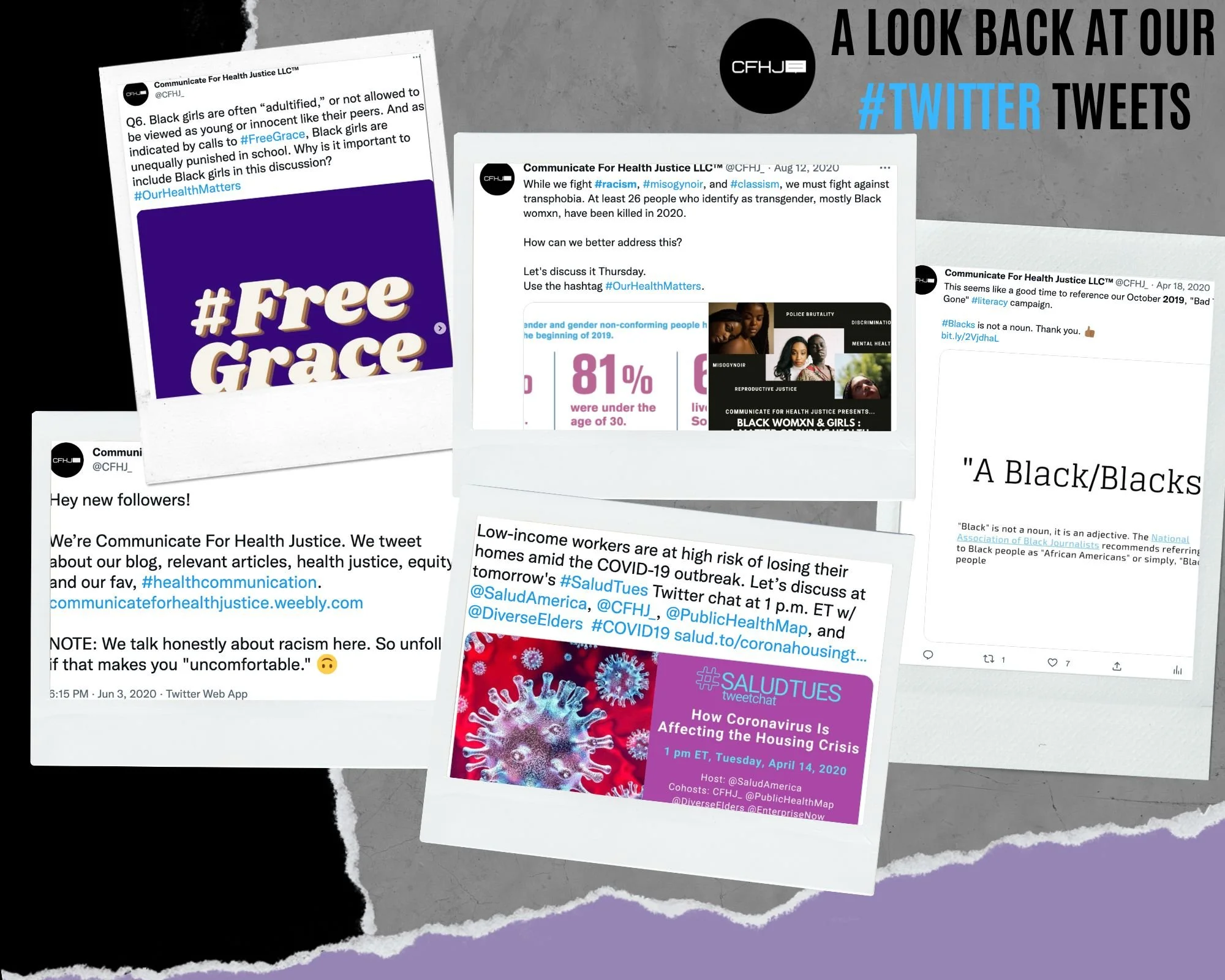
A LOOK BACK AT OUR #TWITTER TWEETS
Since 2018, CFHJ has held a crucial space for communication professionals to push the envelope, decenter whiteness, and revamp traditional health communications through mediums of social media. One of those mediums was Twitter.
With the future of Twitter unclear, here’s a recap of a few of CFHJ’s most significant #Twitter tweets.
#FreeGrace
In May 2020 a 15-year-old Black sophomore, identified as “Grace,” from Beverly Hills, Michigan was incarcerated at a juvenile detention center for failure to complete her homework during virtual school.
CFHJ used its platform to highlight the connection between #educationinequity and justice for Black girls, which we deem a #healthcomm, public health issue.
#OurHealthMatters
In August 2020, CFHJ’s #OurHealthMatters twitter forum pointed out the severe #healthcommunication gap in addressing the health needs of Black womxn and girls.
#OnlineCampaigns
Though not our best-named campaign, #BadTermsBeGone was one of the first online #healthcomm campaigns to address language bias. Our #ReThinkHealthComm campaign is ongoing and calls for a deeper analysis of who is doing #healthcommunication and how it’s done. And both campaigns are the impetus behind our annual racial diversity in #healthcomm report!
#Tweetchats
In 2019, the first introduction of CFHJ to Twitter began with the ever-popular #twitterchat! In 2020, tweet chats reached heightened use due to the pandemic and the need for quick, reliable information. Salud America was one of the first partners of CFHJ, and we have been fortunate to continue blossoming because of it!
And many more #tweetchats followed! Here are two others focused on #gunviolence prevention and #mentalhealthequity. #healthcomm
#LiveTweeting
CFHJ used Twitter to “live stream” prescheduled #healthcommunication events, like 2020’s “Evening Screenings,” and the first 2022 “History of Health Justice Activism” session.
#CallingPeopleOut
Sometimes, calling people out online is necessary. It helps to get people talking about needed change, which is one way that CFHJ has grown over time. In July 2020, by making noise, CFHJ helped get a stereotypical infographic for #COVID19 prevention removed from #Twitter and other platforms.
#CallingPeopleIn
And then there are other times where calling people in is the way to go. Exhibit A, when CFHJ helped another #healthcomm org with their posting strategy online. (To this day, don’t use the term “Blacks.”🙃)
So going forward (if Twitter does fall apart), how will YOU continue to communicate for health justice?
-
CFHJ X PHOTOVOICEWORLDWIDE
Photovoice: A New Way to Communicate For Health Justice, Chelsea Dade, Creator & Executive Director
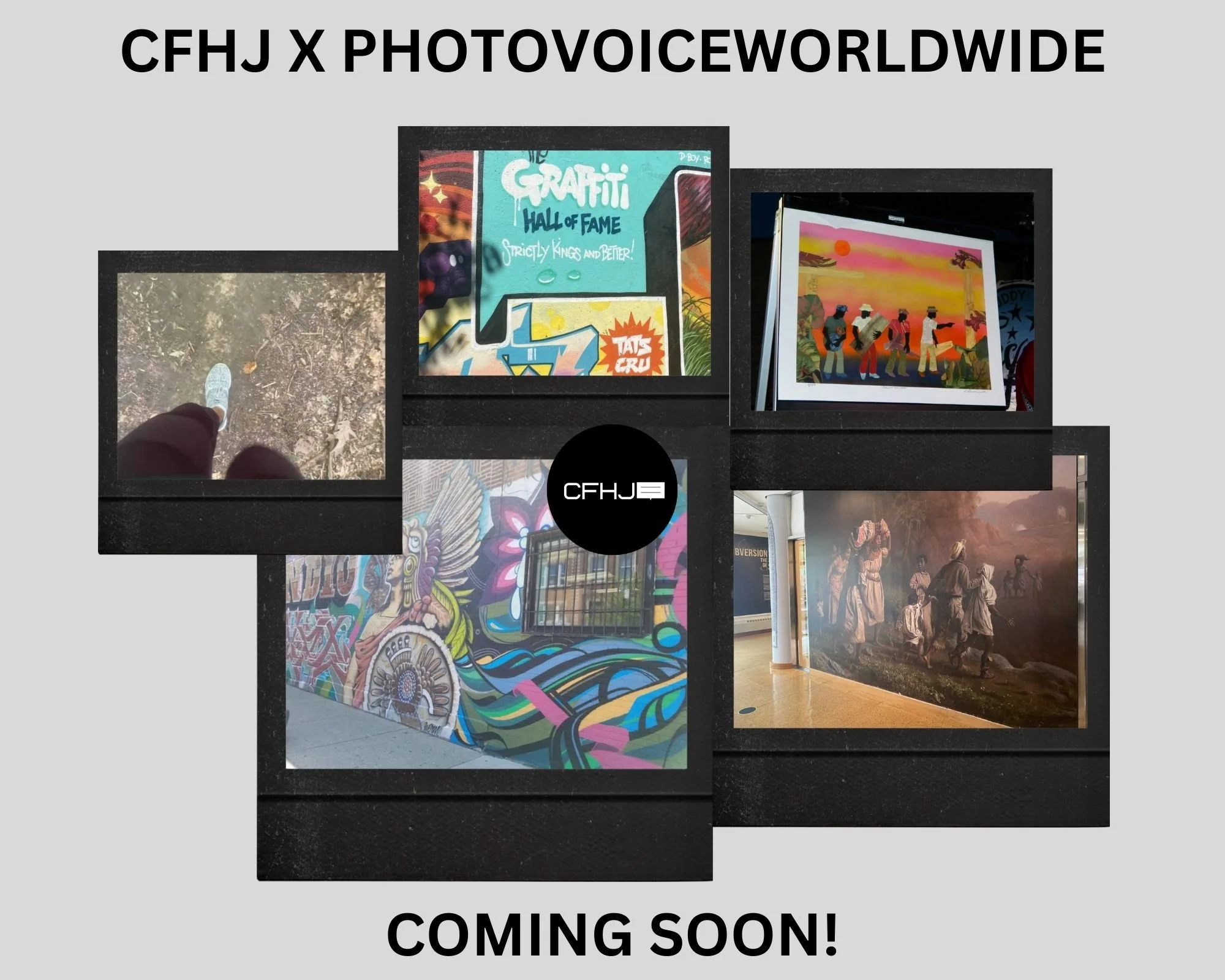
Above: Images I took during my travels (from left to right clockwise: hiking trip, Graffiti Hall of Fame in New York, Black Folk Art in Chicago, Subversion & The Art of Slavery Abolition at the Schomburg Center in NYC, Graffiti art in Chicago) This summer I had the exciting opportunity to enroll in a facilitation course through Photovoice Worldwide. Photovoice Worldwide (PVWW), LLC is a small, women-owned social enterprise that helps individuals and organizations worldwide use photovoice safely, ethically, and successfully, and creates a global community for photovoice peer-to-peer support and continuing education.
What is photovoice?
Photovoice is a qualitative methodology that provides a platform for people to share their lived experiences through photography and words. The course I took was called “Photovoice Facilitation: The Basics.” The course gives attendees the necessary knowledge to organize and execute a photovoice program in their communities.
What does photovoice have to do with health justice?
If we want to tell better narratives about health justice, we need to provide that information in varying formats. Health justice needs to be explored in digital, creative, and written, and physical mediums to embody the fact that everyone learns differently.
What’s next?
I’m writing this post because I genuinely believe in the work that PWW is doing for equity and justice through communication and art. I’m also excited about this group because we have formed an official partnership and will be collaborating on several projects in 2022 and 2023.
I encourage you to learn more about them and continue to follow CFHJ on social media for updates!
· Blog: https://www.photovoiceworldwide.com/news-blog/
· LinkedIn: https://www.linkedin.com/company/photovoiceworldwide/
· Instagram: https://www.instagram.com/photovoiceworldwide/
· YouTube: https://www.youtube.com/channel/UCKRHg0fbAIXhLMuX9hNIVxg
-
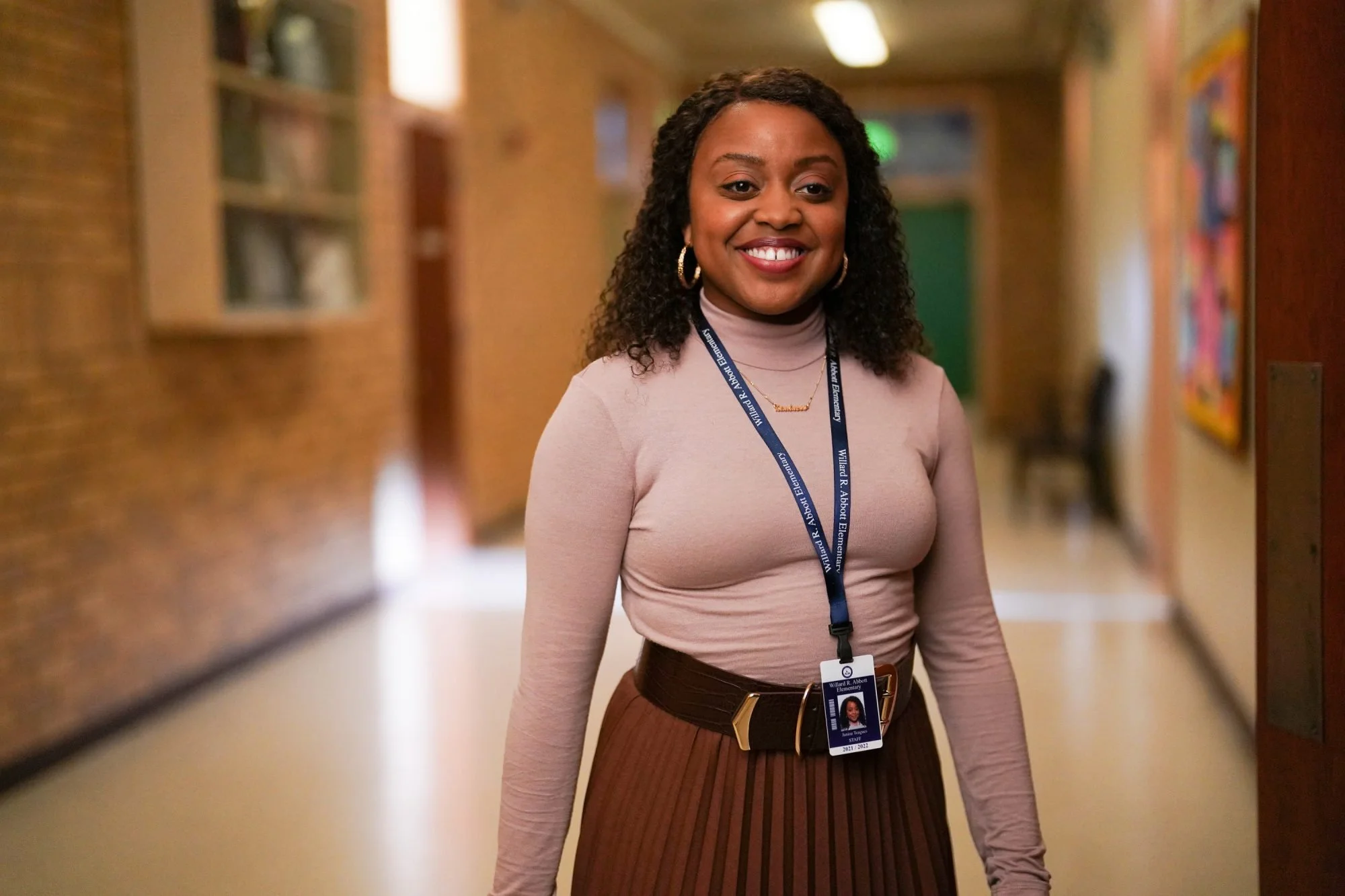
Why Quinta Brunson’s Move to Donate the Marketing Budget for “Abbott Elementary” is a Game Changer
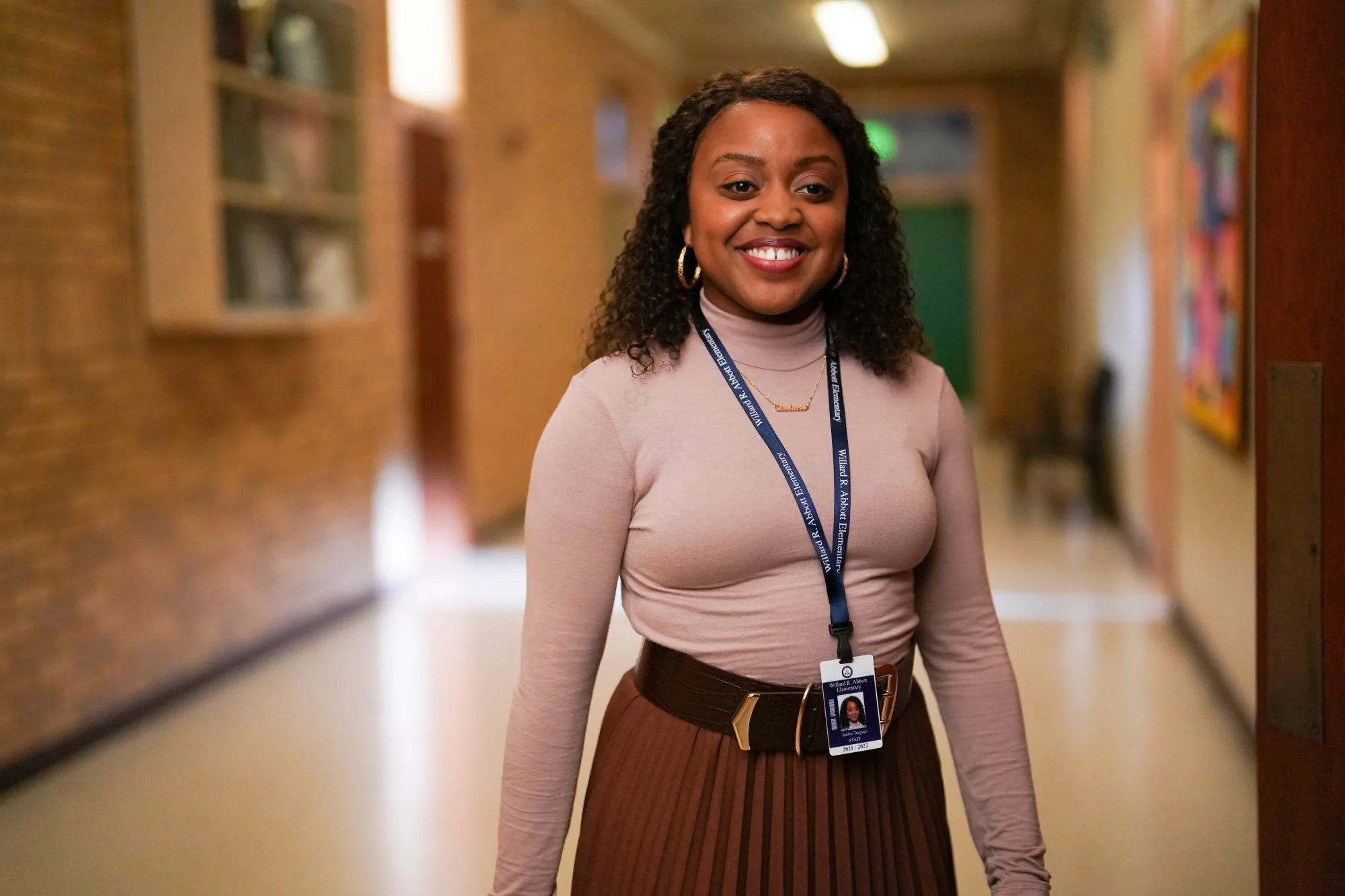
Credit: Photo by Ser Baffo/ABC
by Chelsea Dade
I’ll admit, I was actually late to the Abbott Elementary train. But I’ve been a fan of Quinta since her days on Buzzfeed! (where my Millennials at?) While the show has been on since last year, I watched the entire kickoff season the weekend of Feb 26th. And I couldn’t stop laughing. In my past life, I worked as a program facilitator in Chicago Public Schools, and the opening point about the importance of rugs in kids’ classrooms immediately stood out. Colorful rugs in classrooms make the learning spaces less cold and more inviting, and yes, the kids will nap on their own occasions. But they are really important, and it was such a creative and accurate way to start a show about the complexity and inequity of the American school system.
If you didn’t know, Abbott Elementary is a TV show about a group of teachers who work at Abbot Elementary, an under-resourced, predominately Black elementary school in Philadelphia. It just wrapped its first season and received national acclaim for its wit, humor, and realism. (And has just been renewed for Season 2!)
In early March, it was announced by the show’s Creator Quinta Brunson that they would put their marketing budget for the show toward buying school supplies for the teachers. Brunson has a special connection to educators, as she witnessed her mother work for 40 years as a teacher.
In a move we rarely see in the world of “look at me” marketing and communications, Brunson and her team showed the importance of knowing your audience and prioritizing them first. Abbott Elementary could have used the money to continue promoting their show through various TV and digital platforms and paid ad placements, but instead, they brought it back to the community they wanted to highlight, teachers.
Now, bringing this back to communications. There are media and communications organizations that make donations to a community-based organization, typically during the holidays and for taxable purposes. But it is certainly not a common practice year-round.
So I ask…what if more communications firms worked with community-based organizations to prioritize their billions of marketing dollars into tangible resources that communities need rather than prioritize marketing? What if instead of indirectly marketing healthcare resources we worked harder to connect the people directly to those resources? Quinta is working with Scholastic to provide diverse books to elementary students: why can’t health communication firms repurpose their marketing budgets to provide tangible health education resources to communities they work with? Where would that take us?
It’s worth considering…
-
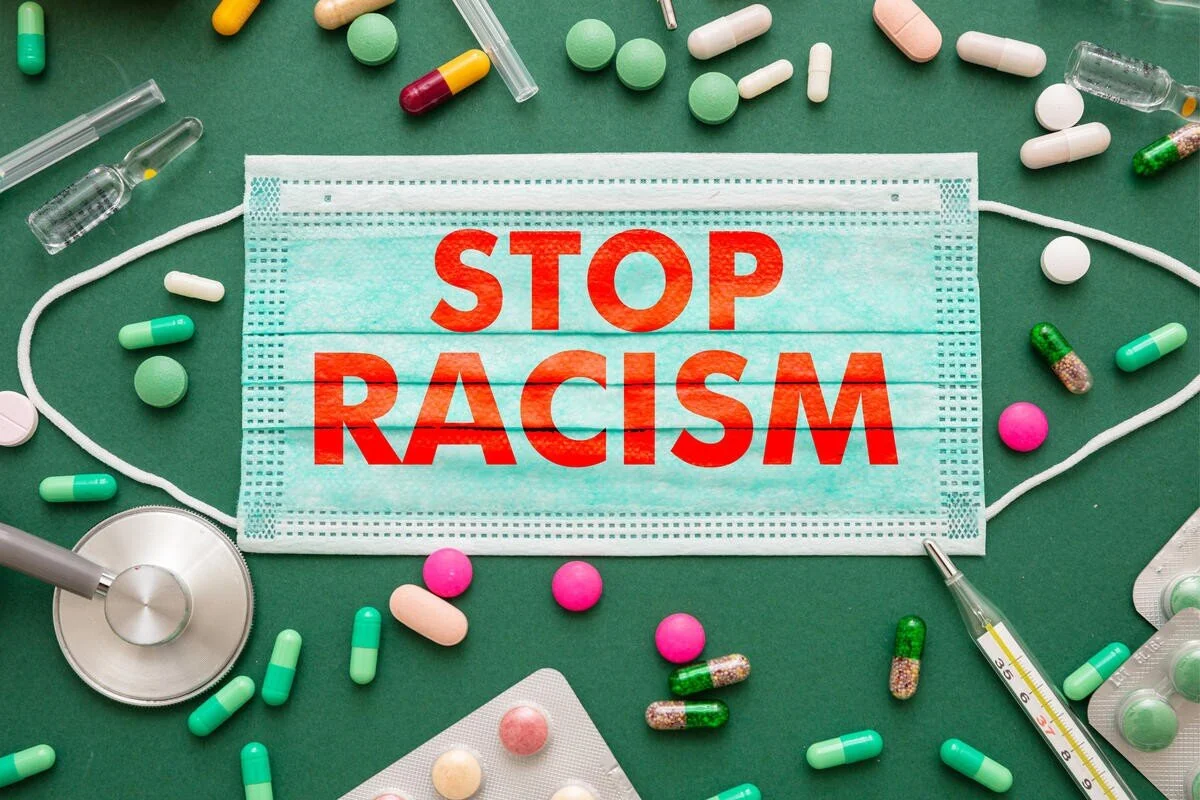
Op-Ed: Black Vaccine Hesitancy Stems from a Long History of Medical Racism
Dr. Susan Moore, a Black medical doctor, recently died of COVID-19. She documented her experience leading up to her death, including being denied pain medication and proper treatment. Despite her being a doctor, despite her speaking in medical terms and understanding the protocols. She blamed her poor treatment on medical racism, which has been going on since, well, since Black people came to this country in chains.
At no time in history has the health of Black Americans equaled that of White Americans. From the days of slavery until now, the White medical community’s policies, practices, and prejudices have had an enormous impact on the health of Black people. When Africans began populating this country, mainly as slaves and second class citizens, many White doctors were taught and subscribed to the notion that Black people required different treatments because they could tolerate more pain and had unpredictable reactions to medications. Therefore, White physicians were rarely careful or sensitive when treating Black people.
James Marion Sims, widely recognized as the father of modern gynecology, came to prominence by performing shocking experiments on enslaved women, while also forcing them to perform domestic duties and serve as nurses in his clinic. One of his patients was an 18-year-old named Lucy, who suffered incontinence after giving birth. During her procedure a few months later, Lucy was on her hands and knees, screaming in pain for an hour while a dozen doctors watched. Dr. Sims performed the same surgeries on White women, but with anesthesia.
The notion that Black people do not experience pain similar to White people still exists. A 2016 study by the University of Virginia revealed a significant number of white medical students and residents held false beliefs about the biological differences between Black people and Whites, including that Blacks have thicker skin and do not feel pain as acutely. These notions show up in practice, even among children. A study of nearly one million children with appendicitis revealed that Black children were less likely than White children to receive pain medication for moderate and severe pain.
Another particularly egregious example of medical racism occurred in an operating room at the Medical College of Virginia in Richmond in 1968. A 54-year-old African American factory worker, Bruce Tucker, fell at work and hit his head. He was taken to the hospital unconscious. When the doctors rushed him to the operating room, they did not attempt to revive him. Instead, they harvested his heart and kidney for a white patient who needed them. No effort was ever made to contact Tucker’s relatives. It is still unclear today as to whether Tucker was actually brain dead, as the surgeons declared.
There are many accounts in history books, medical literature, and other periodicals about unethical and immoral medical procedures on Black people due to racist attitudes and practices. The Tuskegee experiment is a well-known example. From 1932 to 1972, Black men in Tuskegee, Alabama who had syphilis were recruited for a medical study to determine the course of the disease. The men were informed they had “bad blood” (at the time, the term encompassed several medical problems, including syphilis) and that they would receive free health care from the government. None were ever given antibiotics, despite the treatment being available. This horrific practice only came to light in a newspaper story.
So, here we are in 2021 in the midst of a raging pandemic, where Black people are dying disproportionately. A vaccine is available, and a lot of media attention has been focused on the “vaccine hesitancy” of Black people. It’s no wonder, considering our history. A cynical view would be that the attention paid to Black vaccine hesitancy is not because of an outpouring of sympathy for our COVID-19 death rate, but because the U.S. won’t reach herd immunity without the participation of at least some Black people getting the vaccination. America needs us but has a hard time admitting it.
Black people have a lot to offer America. Indeed, look at the votes from the presidential election and the January runoff in Georgia. Black voter turnout is credited with changing the political tide of this country.
If a Black physician can’t get proper care in a hospital, what chance does any Black person have? Non-Black people must recognize this disparity and speak up and speak out when seeing these racist practices. Non-Black people should also take some time to study African American history, at least during this month, to discover how much Black people have done and continue to do for this country. We believe, like any other American, that this is our home. We want to live a productive life and contribute to societal progress. But how long will it take for America to see that Black people love this country even though this country seems not to love us?
# # #
Cynthia Nickerson is a media specialist at the Institute for Public Strategies, a Southern California-based nonprofit that work alongside communities to build power, challenge systems of inequity, protect health, and improve quality of life.
-
Millennial Perceptions of COVID-19
CFHJ
On January 18th, Communicate For Health Justice (CFHJ) held a MLK Day of Service with a public health twist. The goal for the day was for each attendee of the Day of Service to talk to one or more family members or friends and ask a few questions to better understand their perceptions about COVID-19.
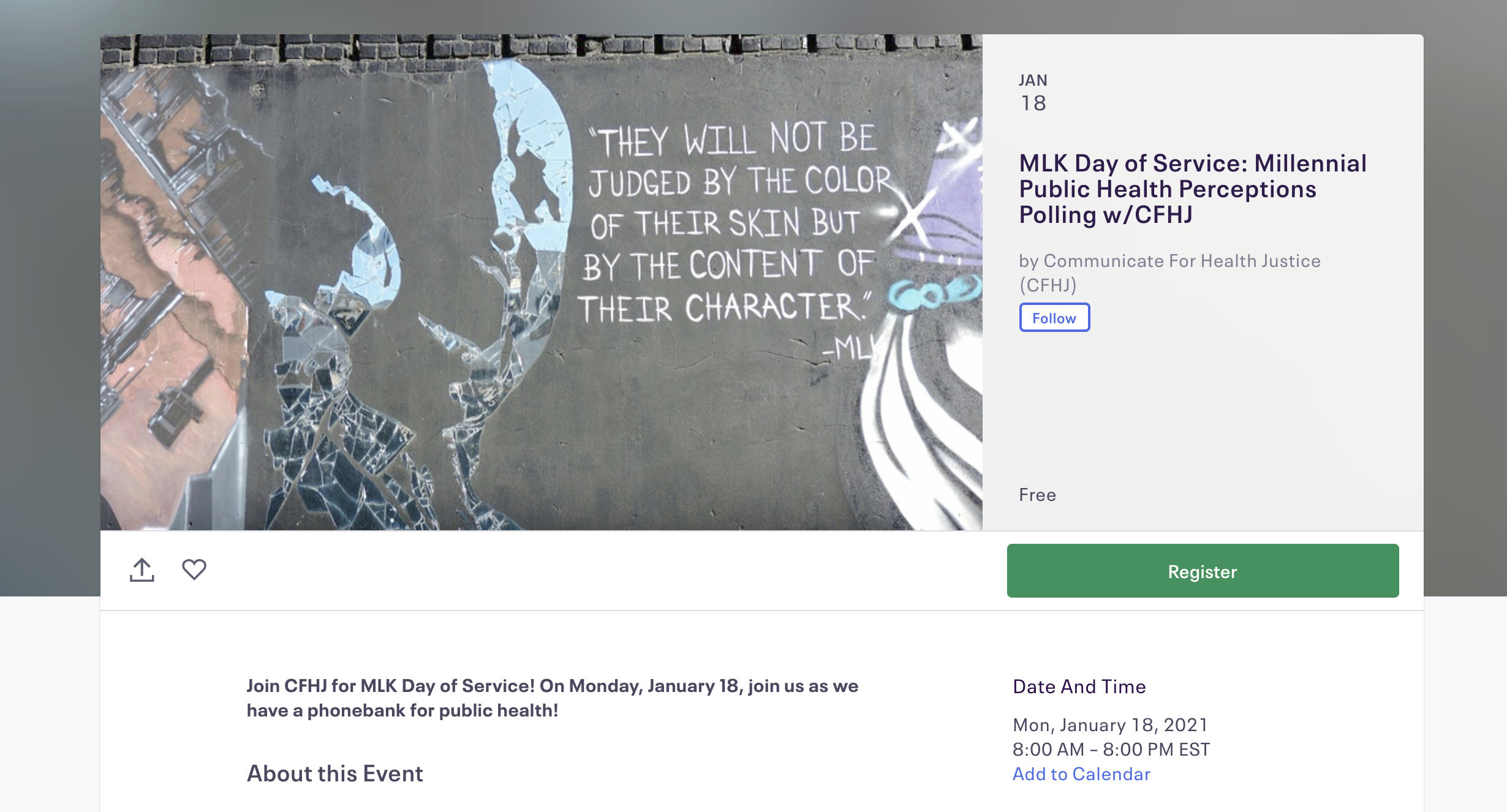
The format of the day was simple. Attendees signed up for one or more two-hour shifts for the event through the nonpartisan voter engagement platform, Mobilize. Shortly before January 18th, a Zoom meeting link was provided to all registrants. In total, 53 people registered for the event. The most popular shift that people signed up for was from 8-10 am ET. Once attendees logging into Zoom and received the overview and forms, they began making calls. Like a phonebank, people could stay in the Zoom or hop in and out. CFHJ provided some ideas of who attendees could call, but ultimately it was up to them to make the call. Responses were recorded anonymously and are aggregated into a visual report (below) that can be found here on CFHJ’s web site.
So why a poll for public health on MLK Day? After getting a better sense of what Millennials are thinking about COVID-19, another main purpose of the day was to connect callers to scientific-based resources that they might have not known about. We’re talking CDC, NIIH, FDA, and the other federal branches of government that provide health information. On a day that marks the celebration of the most dedicated civil servants in the US, Dr. Martin Luther King Jr., the moment to serve for public health felt right in line. CFHJ hopes to hold many more events that assess public perception, so stay tuned for more.
The Data
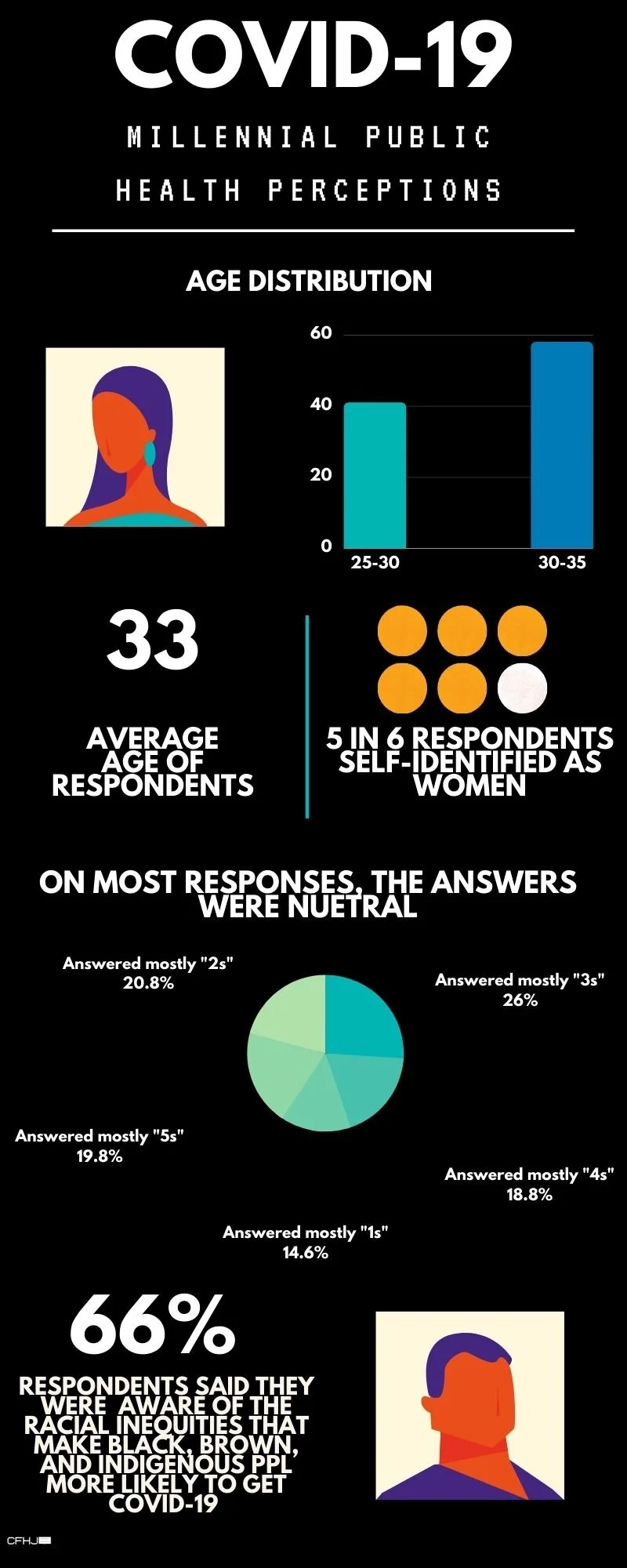
Because the data collected was compiled over 24 hours, the sample size for this poll is relatively small. Data The average age of respondents was 33 and 80% of respondents self-identified as female.
Poll questions were based on a 1-5 scale system. While this scale can leave room for subjectivity, it was a cleaner, simpler methods to aggregate responses. A “1” indicates the least approval in a poll question and a “5” indicates the most approval in a poll question. For example, the initial question was read as, “On a scale of 1-5, with 1 being least understanding and 5 being most understanding, what is your understanding of coronavirus?”
For a complete data breakdown, contact communicateforhealthjustice@gmail.com for the full report.
-
Millennial Perceptions of COVID-19
CFHJ
On January 18th, Communicate For Health Justice (CFHJ) held a MLK Day of Service with a public health twist. The goal for the day was for each attendee of the Day of Service to talk to one or more family members or friends and ask a few questions to better understand their perceptions about COVID-19.
The format of the day was simple. Attendees signed up for one or more two-hour shifts for the event through the nonpartisan voter engagement platform, Mobilize. Shortly before January 18th, a Zoom meeting link was provided to all registrants. In total, 53 people registered for the event. The most popular shift that people signed up for was from 8-10 am ET. Once attendees logging into Zoom and received the overview and forms, they began making calls. Like a phonebank, people could stay in the Zoom or hop in and out. CFHJ provided some ideas of who attendees could call, but ultimately it was up to them to make the call. Responses were recorded anonymously and are aggregated into a visual report (below) that can be found here on CFHJ’s web site.
So why a poll for public health on MLK Day? After getting a better sense of what Millennials are thinking about COVID-19, another main purpose of the day was to connect callers to scientific-based resources that they might have not known about. We’re talking CDC, NIIH, FDA, and the other federal branches of government that provide health information. On a day that marks the celebration of the most dedicated civil servants in the US, Dr. Martin Luther King Jr., the moment to serve for public health felt right in line. CFHJ hopes to hold many more events that assess public perception, so stay tuned for more.
The Data
Because the data collected was compiled over 24 hours, the sample size for this poll is relatively small. Data The average age of respondents was 33 and 80% of respondents self-identified as female.
Poll questions were based on a 1-5 scale system. While this scale can leave room for subjectivity, it was a cleaner, simpler methods to aggregate responses. A “1” indicates the least approval in a poll question and a “5” indicates the most approval in a poll question. For example, the initial question was read as, “On a scale of 1-5, with 1 being least understanding and 5 being most understanding, what is your understanding of coronavirus?”
For a complete data breakdown, contact communicateforhealthjustice@gmail.com for the full report.
-
Dr. Susan Moore: #SayHerName
Chelsea Dade
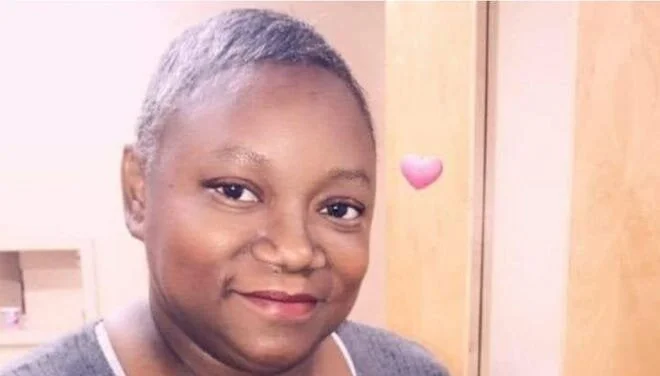
Wow…how to begin. When I first read about Dr. Susan Moore’s death, I almost didn’t want to believe it was true. Like many others, I read the articles online, visited the tweet threads by the phenomenal healthcare professionals that I follow, and watched the reporting of her story on the news. But I still didn’t want to believe it was true. A doctor, a Black woman, was denied treatment for her pain, ignored, all while suffering from COVID-19, and subsequently passed away after. It was, and is, too much to bear.
If you’ve been following CFHJ for a while, you know that the focus of this platform has evolved over time. But the mission remains the same. We discuss and share stories that mainstream healthcare neglects. Dr. Moore is one example that we should not have to discuss, but here we are. Perhaps it was due to the second wave of Black Lives Matter, or the emergence of COVID-19, but this year we’ve answered the call to place an even stronger focus on health equity, especially for Black communities.
Are health care systems adequately answering this call too? Are public health agencies turning their attention, and grant funding, towards investing in minoritized communities? Or has it remained business as usual? This brings me back to the late Dr. Susan Moore. Why are some health care groups refusing to #SayHerName? To say Dr. Moore’s name is not solely the role of healthcare professionals. We need organizations to speak up when a wrong like this has been done. Systems can’t in one breath say they support health equity and oppose racism, then ignore or refuse to comment on a death transpired by health inequity and racism.
What happened to the bevy of calls stating #BlackLivesMatter a few months ago? Where is that energy?
I like to think that I am but one cog in the machine for health equity. I’m not a healthcare provider, I’m not a social worker, I’m not a teacher or a CEO of a health system. But regardless of our position in this society, we all have the opportunity to say something. I am a communicator with a mission to change people’s minds, and sometimes hearts. And each day, I try my best to do my part by highlighting health inequity exacerbated by racism because of Dr. Susan Moore. Because of Breonna Taylor, an award-winning EMT. Because of many other Black women who have been neglected and mistreated for centuries because of their gender and color of skin. Because each day, I choose to ask myself, “if I don’t speak up, who will?”
In 2021, I challenge more people to begin asking themselves this same question and to remain consistent when speaking up for the protection of Black lives.
To learn more about Dr. Moore, I encourage you to read the op-ed, #SayHerName: Dr. Susan Moore.
-

What’s Next for Public Health?
Chelsea Dade
Well, we made it (sort of). Now that there is a new administration in line, we can expect to get back to a bit of normalcy. Who knew that our public health system could be turned upside down in less than a year?
For the most part, we all knew that the CDC was a government-run entity. What we did not expect was to witness an administration use their executive control in a manner that hurt the public’s health, rather than protect it.
We are nearing a vaccine but let us never forget the way that COVID-19 challenged our ideas about the strength of the American public health system. The current administration has shown us that the federal government has much more power than we as health professionals like to admit. Whether you are a part of a well-funded state health system or not, work in communications or public policy, the delays in guidance from the CDC, misinformation, and inadequate supplies of protective equipment were consequences that were primarily out of the public health industry’s hands. And that was a scary thing to witness.
Thankfully, we are beginning to see the other side of the tunnel. But let’s look at a few considerations for the field of public health going forward:
1) How will we disseminate the vaccine to priority communities? By now you’ve probably seen the news from Moderna, Pfizer, Oxford, and other private-sector manufacturers that are getting closer to developing an effective COVID-19 vaccine. Some of these trials have even managed to test the efficacy of a vaccine on diverse groups of people. But has anyone thought about how the government and health systems will get people to take the vaccine? Let’s assume the vaccine is paid for by employer-based insurance, the ACA, and Medicaid or Medicare. Now the vaccine is “accessible.” The next step is getting people to take the vaccine. Let’s not forget the horrific experiences African Americans have had with medical experimentation. Access is one thing, trust is another. Government officials are going to need the insight of people in public health, particularly those who are Black and people of color, and also have a background in health communication and community engagement if we want to achieve maximum vaccine distribution in all communities.
2) The idea that public health can operate in a void above politics cannot persist. We have seen first-hand how deeply entrenched politics can be in public health without provocation. Any industry related to health and wellness, from healthcare to group fitness, must come to terms with the fact that politics affect all aspects of the work we do to keep people healthy. Some people even refer to the commonly quoted “social determinants of health” as the “political determinants of health.” We look at race, gender, sexual identity, and religion, and the way that these markers determine who is deemed worthy of health is indeed political.
3) Public health and government need to work as one! I know some of you are probably rolling your eyes at this last one. But it’s true! People with health backgrounds must be in positions to relay their expertise in public service for the greater good. Who better to advocate for more public health funding that the people who know public health best? We need more leaders with backgrounds in public health, like Rep. Elect Cori Bush and Rep. Lauren Underwood, along with other voices to amplify the message of health equity in the halls of government.
Public health is a field where everyone should be able to find their own space. We can’t forget that this as we attempt to pull off the most historic public health intervention in our time to end COVID-19. It will take all of us.