

CFHJ
On January 18th, Communicate For Health Justice (CFHJ) held a MLK Day of Service with a public health twist. The goal for the day was for each attendee of the Day of Service to talk to one or more family members or friends and ask a few questions to better understand their perceptions about COVID-19.
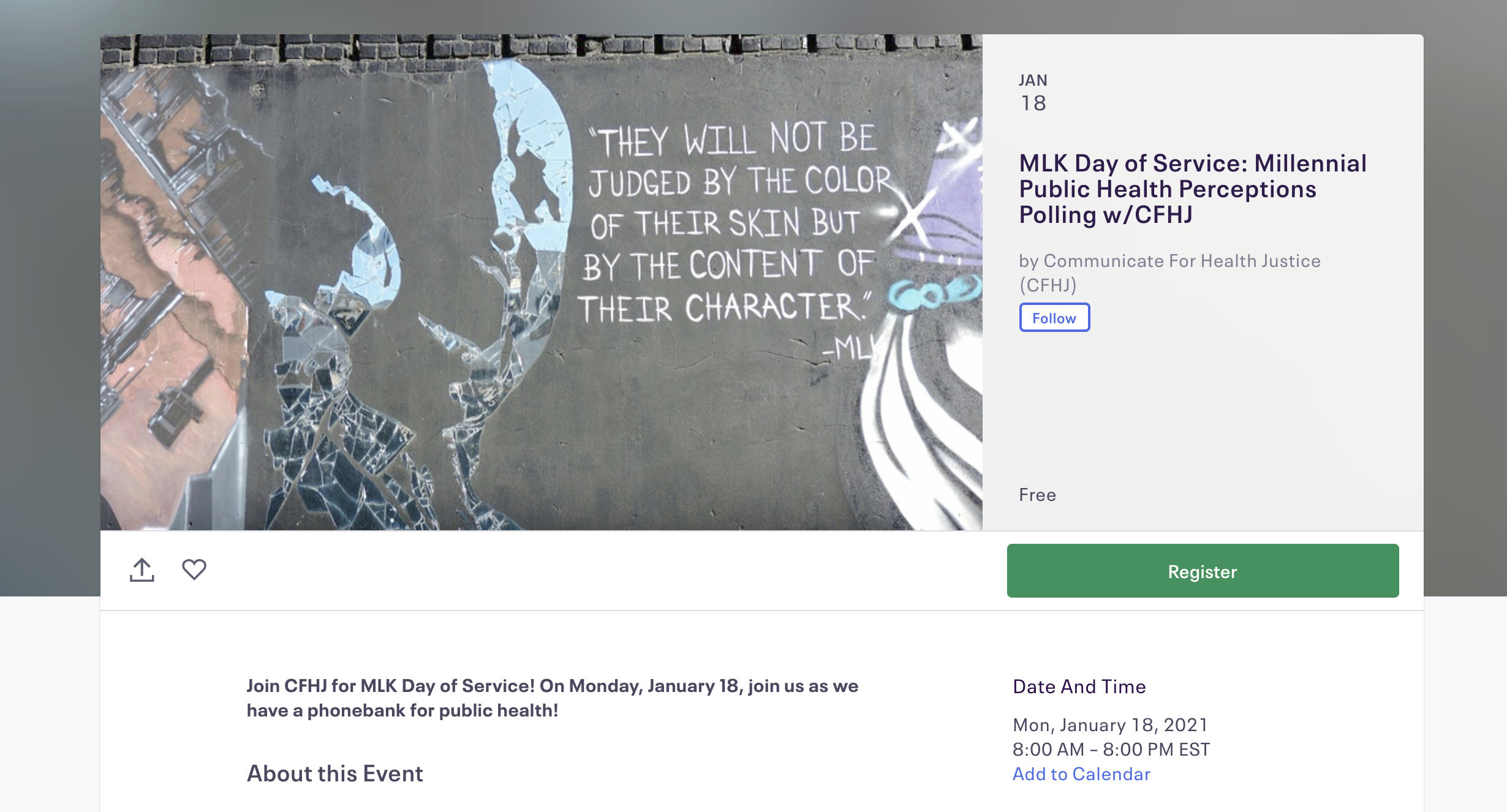
The format of the day was simple. Attendees signed up for one or more two-hour shifts for the event through the nonpartisan voter engagement platform, Mobilize. Shortly before January 18th, a Zoom meeting link was provided to all registrants. In total, 53 people registered for the event. The most popular shift that people signed up for was from 8-10 am ET. Once attendees logging into Zoom and received the overview and forms, they began making calls. Like a phonebank, people could stay in the Zoom or hop in and out. CFHJ provided some ideas of who attendees could call, but ultimately it was up to them to make the call. Responses were recorded anonymously and are aggregated into a visual report (below) that can be found here on CFHJ’s web site.
So why a poll for public health on MLK Day? After getting a better sense of what Millennials are thinking about COVID-19, another main purpose of the day was to connect callers to scientific-based resources that they might have not known about. We’re talking CDC, NIIH, FDA, and the other federal branches of government that provide health information. On a day that marks the celebration of the most dedicated civil servants in the US, Dr. Martin Luther King Jr., the moment to serve for public health felt right in line. CFHJ hopes to hold many more events that assess public perception, so stay tuned for more.
The Data
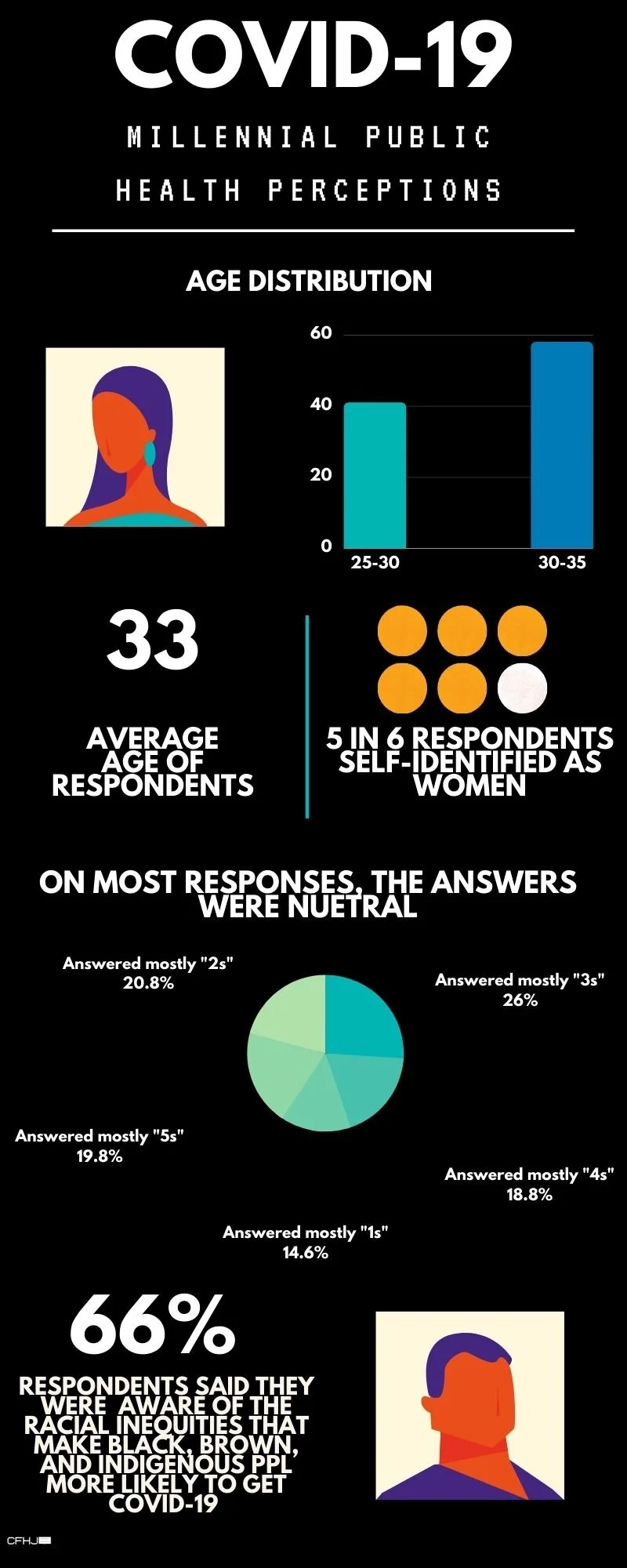
Because the data collected was compiled over 24 hours, the sample size for this poll is relatively small. Data The average age of respondents was 33 and 80% of respondents self-identified as female.
Poll questions were based on a 1-5 scale system. While this scale can leave room for subjectivity, it was a cleaner, simpler methods to aggregate responses. A “1” indicates the least approval in a poll question and a “5” indicates the most approval in a poll question. For example, the initial question was read as, “On a scale of 1-5, with 1 being least understanding and 5 being most understanding, what is your understanding of coronavirus?”
For a complete data breakdown, contact communicateforhealthjustice@gmail.com for the full report.